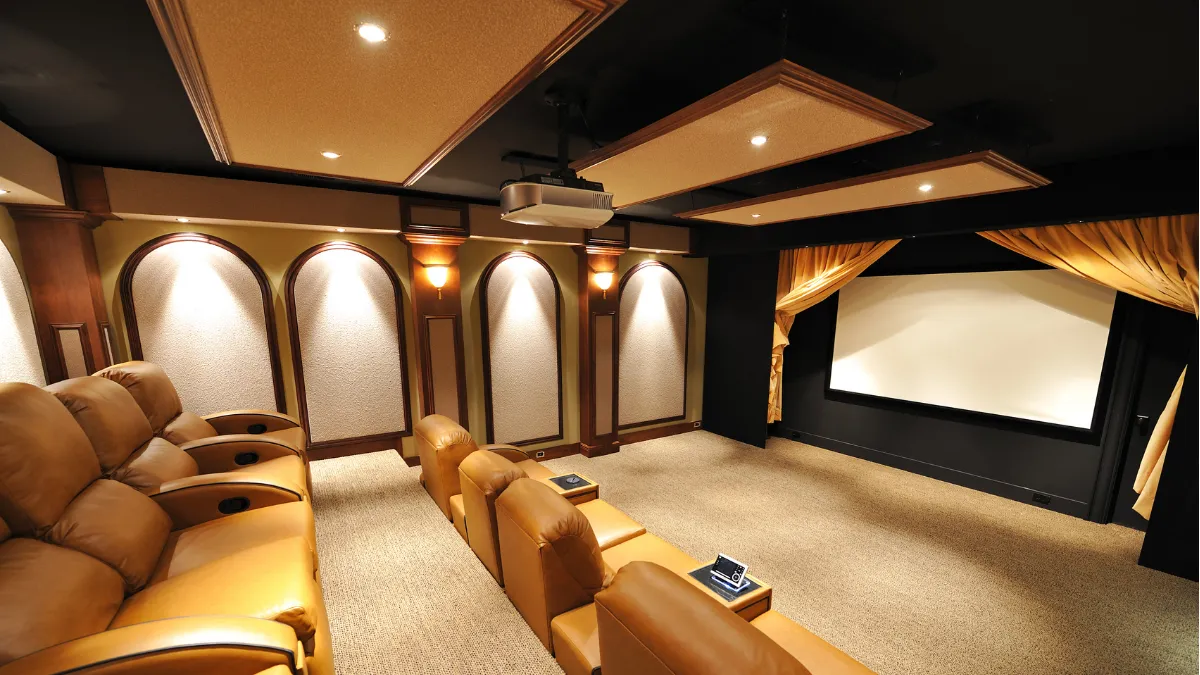
How a Professional Home Theater Design Creates a Better Movie-Watching Experience
A great home theater is about much more than buying a large television and surround-sound speakers. The best home theaters are carefully designed around the room, the equipment, the acoustics, and the way the homeowner wants to use the space.
Professional home theater design brings these elements together to create a more immersive and enjoyable experience. From speaker placement and acoustic treatment to lighting, video, and automation, every detail can contribute to better performance.
At SIGNALS, we design and integrate custom home theater systems for luxury homes throughout Los Angeles and Palm Desert, creating entertainment spaces that combine exceptional performance with elegant design.
What Makes a Professional Home Theater Different?
A professionally designed home theater is built as a complete system rather than a collection of individual products.
Every component has a role, including:
Display or projection system
Surround sound
Subwoofers
AV processing
Amplification
Acoustic treatment
Theater lighting
Motorized shades
Networking
Automation and control
When these components are properly coordinated, homeowners can experience better picture quality, more accurate sound, and simpler operation.
Speaker Placement Matters
One of the most important aspects of home theater design is speaker placement.
Surround sound depends on speakers being positioned correctly relative to the seating area. Poor placement can create uneven sound, distracting volume differences, or a less immersive experience.
Professional design takes into consideration:
Room dimensions
Seating locations
Speaker positions
Listening distances
Ceiling height
Acoustic characteristics
This helps create a consistent soundstage throughout the primary listening area.
Immersive Audio With Dolby Atmos
Modern home theaters can go beyond traditional surround sound with immersive audio formats such as Dolby Atmos.
Rather than limiting sound to the front, sides, and rear of the room, Dolby Atmos can add overhead audio channels to create a three-dimensional sound environment.
Sounds can appear to move around and above the listener, creating a much more immersive experience during movies, television, and compatible content.
SIGNALS can design audio systems around advanced immersive formats to help homeowners experience their entertainment the way it was intended.
DCI and Professional Cinema Technology
For homeowners looking for an even more sophisticated cinema experience, professional digital cinema technology can take a home theater to another level.
Digital Cinema Initiatives (DCI) standards were developed around professional digital cinema presentation and can be incorporated into high-end private cinema environments where appropriate.
A professionally designed theater can combine high-performance projection, processing, audio, acoustics, and control to create an experience that goes far beyond a typical living-room entertainment system.
For homeowners who want a true private cinema, selecting the right equipment and designing the room around that equipment is essential.
The Importance of Acoustic Treatment
Even the best speakers cannot perform properly in a poorly designed room.
Sound reflects from walls, ceilings, floors, and other surfaces. These reflections can affect clarity and make dialogue, music, and effects less precise.
Acoustic treatment can help control these reflections and improve the room's overall sound characteristics.
Depending on the space, a home theater may incorporate:
Acoustic panels
Bass management
Absorption
Diffusion
Specialized wall treatments
The goal is not simply to make the room quieter. Proper acoustic design helps create a more controlled and accurate listening environment.
Choosing Between a Projector and Display
The right video solution depends on the room, screen size, viewing distance, lighting conditions, and homeowner's preferences.
Large-format displays can provide exceptional brightness and image quality, while projection systems can create an authentic cinema experience with extremely large images.
A professional designer can evaluate the room and determine which solution makes the most sense.
Factors may include:
Screen size
Ambient light
Viewing distance
Room dimensions
Content
Projector placement
Desired cinema experience
Lighting Is Part of the Theater Experience
Lighting is often overlooked when homeowners plan a home theater, but it can dramatically affect the viewing experience.
A professionally integrated lighting system can create different scenes for:
Movie watching
Sports
Entertaining
Cleaning
Intermission
Lights can automatically dim when a movie begins and gradually increase when it ends.
As a trusted Lutron partner, SIGNALS can integrate premium lighting control with the theater system to create a seamless experience from a single control interface.
Motorized Shades Can Improve the Picture
Windows can introduce glare and unwanted ambient light into a theater or media room.
Motorized shades provide a convenient way to control natural light and improve viewing conditions.
Shades can automatically lower when a movie starts or adjust based on the time of day.
When integrated with lighting and automation, the entire room can transition into a dedicated viewing environment with a single command.
Simple Control Makes the Difference
A sophisticated home theater should not require a complicated operating procedure.
Professional automation allows homeowners to control the entire system through a centralized interface.
A "Movie Night" scene could:
Turn on the AV system
Select the correct input
Start the display or projector
Lower motorized shades
Dim the lights
Set the appropriate audio mode
Instead of managing multiple remotes and devices, homeowners can activate the entire experience with one button.
Networking Is Essential for Modern Home Theater
Today's entertainment systems depend heavily on the home's network.
Streaming services, smart displays, control systems, media servers, and connected devices all require reliable connectivity.
A professionally designed network helps ensure the theater has the bandwidth and stability necessary for high-quality streaming and responsive control.
For larger homes, enterprise-grade networking can also provide reliable connectivity throughout the rest of the property.
Designing Around the Room
Every home theater presents different challenges.
A dedicated theater may allow complete control over acoustics, lighting, seating, and equipment placement. A media room may need to balance entertainment with everyday living.
Professional design considers the entire space rather than simply selecting equipment.
Important factors include:
Room dimensions
Seating arrangement
Viewing angles
Speaker placement
Acoustic performance
Lighting
Equipment ventilation
Cable management
Future upgrades
This holistic approach helps ensure the finished theater looks as good as it performs.
Why Professional Home Theater Installation Matters
High-end equipment does not automatically create a high-end theater.
Even excellent speakers, projectors, and displays can underperform when they are improperly installed or configured.
Professional integration helps ensure that equipment is:
Correctly positioned
Properly calibrated
Professionally wired
Integrated with the network
Connected to the control system
Optimized for the room
The result is a system that performs consistently while remaining easy to operate.
Final Thoughts
A great home theater is the result of careful planning rather than simply purchasing expensive equipment.
Professional home theater design considers the entire entertainment environment—from acoustics and speaker placement to video, lighting, networking, motorized shades, and automation.
At SIGNALS, we design and integrate custom home theaters for luxury homes throughout Los Angeles and Palm Desert. From immersive audio and advanced video systems to Lutron lighting control, motorized shades, networking, and smart home automation, we create entertainment spaces designed around the way you watch, listen, and live.